
Cole Bennett and Lyrical Lemonade’s annual Summer Smash festival, presented by SPKRBX, returned last weekend from June 12-14 at SeatGeek Stadium in Bridgeview, Illinois, just outside of Chicago. Over the years, Summer Smash has established itself as the most important independent rap festival in North America, and a true calendar staple for Chicago’s hip-hop scene. Built around Lyrical Lemonade’s cultural eye, SPKRBX’s Midwest concert footprint, and Cole Bennett’s ability to spot what is next before it fully crosses over, the festival has always felt closer to the source than most major rap festivals.
Traditionally known as a rap and hip-hop festival, this year’s edition expanded its horizons in a major way. Hosted across three stages, Summer Smash brought electronic music into the picture for the first time with Skrillex headlining Saturday night, while ISOxo and Whethan helped round out the festival’s first real push into EDM. The move was definitely unexpected to some fans, but in practice it made complete sense. When you look at where rap is right now, especially through rage, hyperpop, trap, bass, underground internet rap, and moshpit culture, the gap between EDM and hip-hop isn’t as wide as people think.
Skrillex was the obvious artist to make that bridge work. He’s not just an electronic music legend, he’s one of the few producers who has consistently moved between dance music, rap, dubstep, pop, and club records without feeling disconnected from any of those worlds. His catalogue and collaborations already speak to that crossover, from working with artists like A$AP Rocky, Kanye West, Kendrick Lamar, Travis Scott, and Rick Ross to more recent moments like “Baby again..” with Fred again.., Four Tet, and Lil Baby.
At Summer Smash, that history mattered because Skrillex’s set felt uniquely tailored to the crowd in front of him. Instead of dropping a standard EDM festival headline set into a rap festival, Skrillex leaned into bass-heavy moments, rap edits, and records that could connect with both sides of the audience. Mixes of Playboi Carti’s “POP OUT” and Chief Keef’s “Love Sosa,” along with a surprise flip of Nettspend’s “Impact,” helped ground the set in Summer Smash’s world while still giving fans the full-scale Skrillex experience. Even with weather cutting the set short, the moment still landed. A Skrillex headline set at Summer Smash was always going to be bigger than the performance itself, because it represented a clear statement about where the festival could go next.
ISOxo and Whethan helped make that expansion feel more intentional. ISOxo’s sound already lives close to the world of rage rap, trap, and moshpit energy, making him one of the most natural electronic fits for a younger Summer Smash crowd. He also brought out special guest Rocket Rese, pushing the crowd even further into that chaotic crossover zone. Whethan brought a different kind of appeal, with a sound that has always moved between electronic, pop, hip-hop, dubstep, and internet music culture. Together, they helped frame EDM at Summer Smash less like a random experiment and more like an extension of the way younger fans already experience music.
The rest of the lineup still made it very clear that this was a rap festival first. Friday was led by Lil Uzi Vert and Chicago legend Chief Keef, while Sunday brought Playboi Carti and Lil Baby. Across the weekend, Summer Smash also featured Baby Keem, Yung Lean x Bladee, Sexyy Red, G Herbo, Lucki, Molly Santana, BigXthaPlug, JT, Fetty Wap, 2hollis, ian, Waka Flocka, Nettspend, Lil Skies, RiFF RAFF, Che, Slayr, Famous Dex, PlaqueBoyMax, EsDeeKid, Diamond x Tezzus, 2slimey, North West, and many more.
That lineup shows exactly why Summer Smash has become such a strong brand. The festival can book major stars, Chicago icons, internet cult favorites, nostalgic names, underground risers, and left-field crossover acts, all while still feeling like one coherent world. That world also goes beyond the stages, with large-scale art installations, branded activations, food vendors, merch moments, rides, and carnival-style attractions spread across the grounds. The Ferris wheel and festival rides added to the chaotic summer carnival feeling, giving fans another visual layer to the weekend beyond the performances themselves.
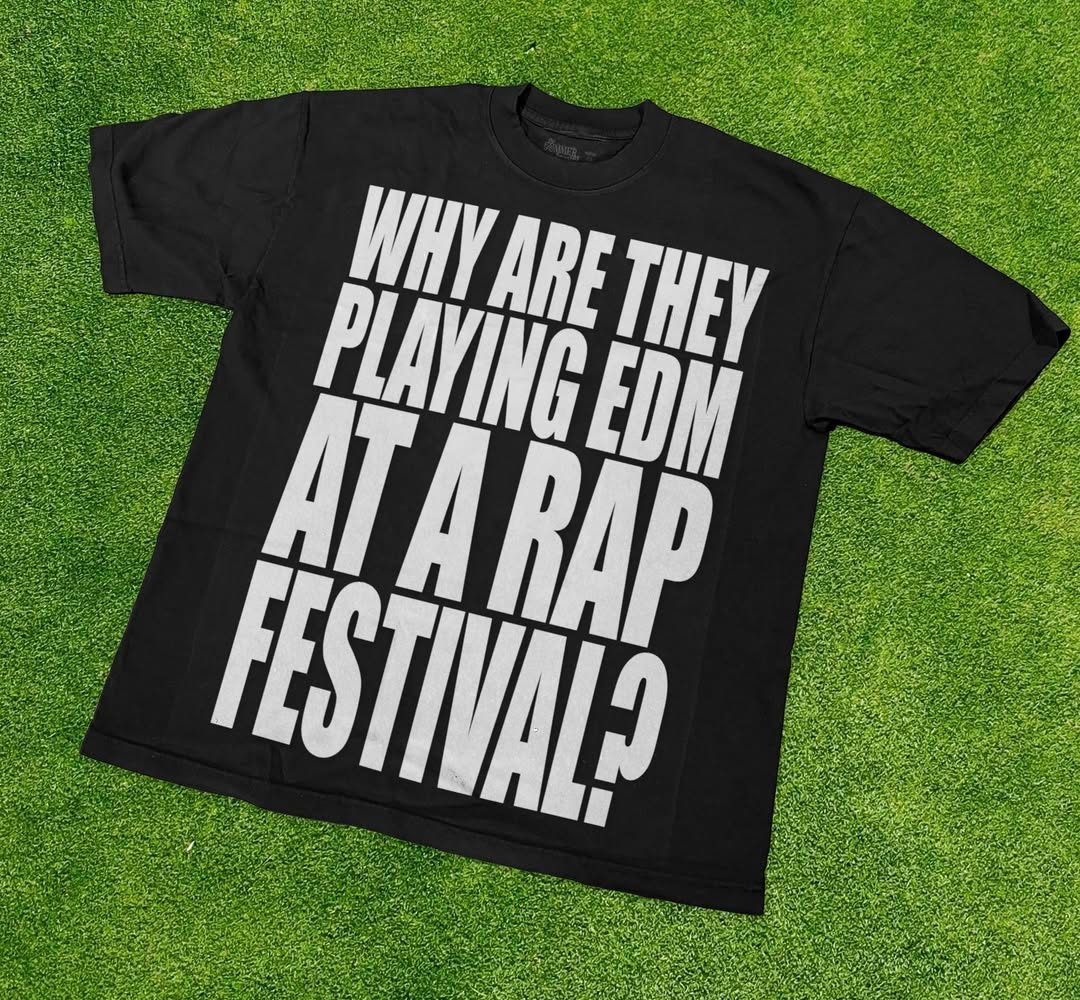
The sponsor and activation footprint helped fill that out too. Across the grounds, Summer Smash featured brand activations from names like Red Bull and others, along with trucks, co-branded merch opportunities, giveaways, and photo-ready spaces that made the weekend feel closer to a cultural marketplace than a basic festival field. The merch also felt especially important this year, with Summer Smash leaning into the conversation around EDM at a rap festival through its “Why Are They Playing EDM At A Rap Festival?” tee. Instead of running from the discourse, Lyrical Lemonade turned it into an actual piece of festival culture.
For fans who could not make it to Chicago, Summer Smash also kept the weekend accessible through official livestreams, letting people tune into the festival from home. That makes sense for a brand like Lyrical Lemonade, which built so much of its identity through music videos, YouTube, viral clips, and internet-first storytelling. Summer Smash isn’t only built for the people on-site, it’s built for the people watching the culture move online in real time.
That is why the EDM expansion worked. Skrillex, ISOxo, and Whethan did not feel like random EDM bookings dropped onto a rap lineup for shock value. They felt like a test of where the culture is already going. A rap festival can still be a rap festival while making room for electronic music, especially when the artists booked understand how to meet that crowd where they are.
Summer Smash didn’t lose its identity by booking Skrillex. If anything, it proved that its identity is strong enough to expand. The festival still belonged to rap, still belonged to Chicago, still belonged to Lyrical Lemonade, and still belonged to the next generation of fans. EDM just finally got invited into the pit.