
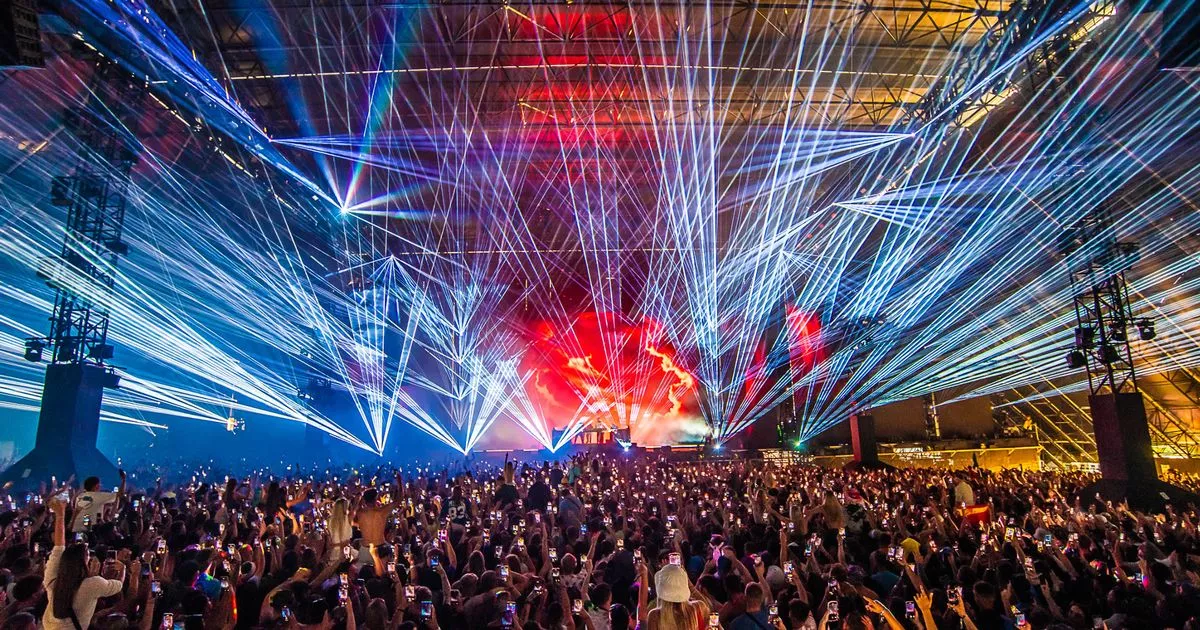
1990s: Origins – Jungle to Drum & Bass
Jungle emerged in early-90s Britain, combining hardcore rave, reggae basslines, and hip-hop breaks. Pirate radio and warehouse raves helped it spread, with hits like “Original Nuttah” by Shy FX. Around 1995, the genre began shifting toward sleeker production and rebranded as drum and bass to avoid negative press. That year saw Goldie’s Timeless hit the UK Top 10 and Roni Size’s New Forms wins the Mercury Prize in 1997. Subgenres like intelligent DnB, jump-up, and techstep began to form unique identities. At the same time, clubs like Blue Note in London became central hubs of the movement. In the U.S., artists like Dieselboy and events like Planet of the Drums brought DnB to clubs, helping the genre gain traction in cities like New York, Philadelphia, and Los Angeles.

2000s: Expansion and Diversification
While DnB fell off UK charts in the 2000s, it thrived underground with a growing international fanbase. Liquid funk rose through labels like Hospital Records, with artists like High Contrast and London Elektricity bringing a smoother, melodic sound. At the same time, neurofunk gained traction through technical, aggressive releases from artists like Noisia and Black Sun Empire. Australia’s Pendulum brought a rock-fused DnB style to the mainstream with tracks like Slam and Propane Nightmares. In the U.S., weekly events and collectives like Planet of the Drums and Bassrush pushed DnB forward, with L.A.’s Respect becoming a DnB stronghold. Scenes also grew in Brazil, home to DJ Marky and Patife, and Eastern Europe, where countries like the Czech Republic became known for large-scale DnB festivals.
2010s: Mainstream Crossovers and New Generation
DnB made a strong return to the charts with DJ Fresh’s UK #1 hit “Hot Right Now” in 2012. Artists like Sub Focus, Netsky, and Wilkinson helped bring DnB to a new generation, delivering massive sets at festivals like Creamfields, EDC, and Tomorrowland. Their polished, vocal-driven productions made the genre more accessible without losing energy. On the heavier end, Noisia continued to innovate until their disbandment in 2020, while Hospital Records maintained a stronghold in the scene by nurturing emerging artists. Toward the end of the decade, younger producers began reviving the jungle sound, paying homage to the genre’s 1990s roots while experimenting with modern production.

2020s: A Modern Resurgence
DnB is more visible than ever, with iconic artists like Andy C and Goldie still headlining shows across the UK and beyond. Mainstream-friendly artists like Hybrid Minds and Wilkinson bring emotional, liquid anthems to packed venues, while the underground thrives on darker, more experimental sounds. In the U.S., DnB gained new traction thanks to artists like REAPER, who introduced the genre to bass-heavy crowds through festivals like EDC Las Vegas, Lost Lands, and Hard Summer. Collectives like Bassrush continue to feature DnB on prominent stages, giving the genre room to grow in a scene often dominated by dubstep and house. Drum and bass in the 2020s is both a legacy genre and a future-facing movement, with global artists and fans keeping its high-energy spirit alive through innovation, nostalgia, and community-driven evolution.