
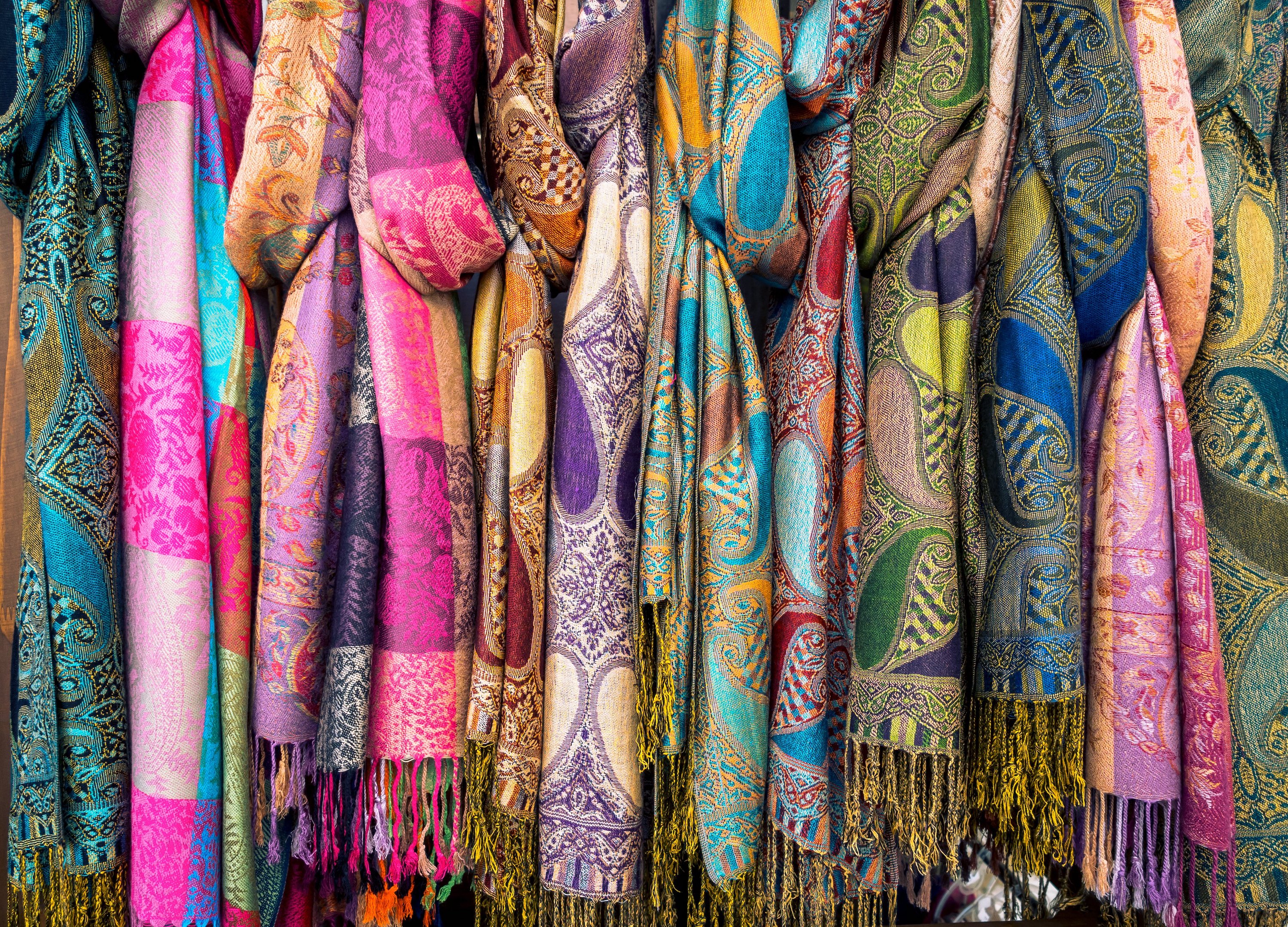
Did you know that pashminas were once a symbol of Himalayan royalty? What began as a hand-woven heirloom has evolved into a festival essential, one that carries a history of craftsmanship, spirituality, and community.
The Origins of the Pashmina
The word pashmina comes from pashm, a Persian term meaning “wool.” Spun from the fine undercoat of the Changthangi goat native to Kashmir and Ladakh, these shawls have been revered for centuries. The wool is lightweight yet warm, incredibly soft, and even mildly water-repellent. Each authentic pashmina can take up to 180 hours to create by hand.
Once worn by Mughal emperors and Indian maharajas, pashminas symbolized refinement and affection, exchanged as dowries and treasured as family heirlooms. For Kashmiri artisans, this craft remains the region’s second-largest source of employment, sustaining entire communities.

From the Himalayas to the Dance Floor
The journey to rave culture began in the 1990s with the Goa trance movement. Western travelers flocked to beaches like Anjuna in Goa, India, drawn by psychedelic music and transcendent gatherings. There, they discovered pashminas weren’t just beautiful; they were practical for cold beach nights and outdoor sleeping. Their lightweight warmth and flowing form fit perfectly with the free-spirited energy of the scene.
As these travelers returned home throughout the late ’90s and early 2000s, pashminas appeared at Burning Man and underground raves, eventually becoming fixtures in dubstep and bass music communities. By the early 2010s, they had exploded across EDM culture.

The Rave Pashmina Today
Though most modern festival versions are synthetic rather than authentic cashmere, they serve a similar purpose. Ravers wrap themselves in pashminas to stay warm during sunrise sets and ground their senses in overstimulating environments. Today’s versions feature UV-reactive dyes and psychedelic patterns that echo electronic music’s visual aesthetic. Within the ethos of PLUR, they’re traded as gifts and exchanged between friends and strangers.
But there’s a difference worth knowing: authentic pashminas are hand-spun from genuine cashmere with intricate embroidery, while rave pashminas are mass-produced from synthetic blends and priced for accessibility.

Culture, Appreciation, and Awareness
Many festival-goers wear pashminas without knowing their roots in centuries-old Kashmiri tradition. True appreciation means honoring those origins: learning the history, supporting authentic artisans when possible, or seeking GI-certified pieces that preserve local livelihoods. If an authentic pashmina isn’t accessible, simply understanding where the tradition comes from (and sharing that knowledge) helps keep the culture alive.
Threads That Tie Us Together
From royal courts to dance floors under desert stars, the pashmina’s story is one of transformation. Whether handwoven in Kashmir or mass-produced for festivals, the pashmina remains what it’s always been: a thread connecting us all.