
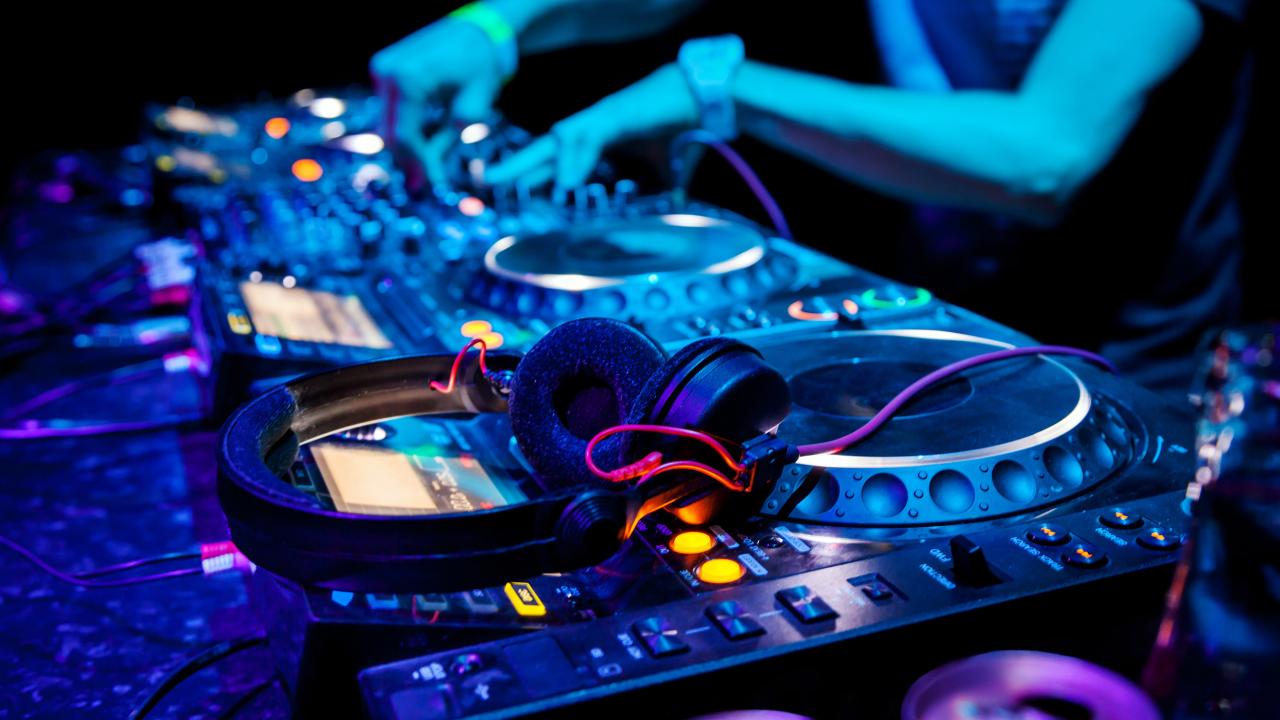
What happens when the synthesized rhythms of disco music meet endless creativity and cutting-edge technology? The answer would be electronic dance music, EDM, a genre that has evolved into a worldwide cultural movement that unites us through sound.
1970s: The Disco Era
We can trace the beginning of electronic dance music to disco music from the 1970s. The goal of disco was to get people dancing, and the music used synthesized rhythms from drum machines and electronic instruments. Popular songs from this genre that helped to inspire EDM innovation included George McCrae’s 1974 hit “Rock Your Baby” and Donna Summer’s 1977 song “I Feel Love.”
1980s: The Birth of House and Techno
The beginning of what would become a global electronic dance music scene started in the American Midwest in the early 1980s. In Chicago, Frankie Knuckles, the resident DJ at the African American LGBT club The Warehouse, made his own remixes of R&B dance music and disco that kept the dance floor grooving all night long. Knuckles is considered by many to be the godfather of house music, which got its name from the Warehouse.

In Detroit, the beginnings of techno originated from abstract instrumental funk, with Juan Atkins being a formative figure in the scene. In 1988, Atkins came out with a track called “Techno Music,” which inspired that year’s defining anthology, Techno! The New Dance Sound of Detroit.
New electronic dance music styles were also emerging in England during this time. These styles included drum and bass, which used a blend of hip-hop, house and dub-reggae-style bass patterns; and downtempo or trip-hop, a more instrumental variation of hip-hop.
Synthpop was created during this period, with hits like a-ha’s “Take On Me” and one of the first house tracks, “On and On” by Jesse Saunders, who is considered one of the originators of house music.
1990s: The Explosion of Subgenres
Electronic dance music subgenres that were developed or continued to be developed in the 1990s included house, techno, drum and bass, hardstyle, dubstep, and trance. These subgenres helped to push EDM into the mainstream music industry, especially in Europe, where the rave scene began to transform into what it is today. Techno and house continued to transform in the United States, but Berlin also played a critical role for both these subgenres. In Frankfurt, trance emerged, starting first as a hard, minimalist, and hypnotic sound, before transforming into the melodic EDM style it is today. In Rotterdam, hardcore techno was created, which later led to the creation of hardstyle.

2000s: The EDM Takeover
Electronic dance music had a slow start in the United States, but it picked up popularity by the early 2000s due to a combination of international DJs and producers shining a light on the genre and the fact that several technological advances were developed, including the Internet, CD-J, and Ableton Live. Producers like Tiesto, Daft Punk, and David Guetta sparked the emergence of EDM into the mainstream in the United States, and we began to see DJs filling stadiums all over the country. The popularity and success of EDM led to the rise of large-scale dance music events across the country, such as the Electric Daisy Carnival and Ultra Music Festival.

The evolution of EDM innovation is a testament to the genre’s creativity, blending a diverse range of influences from across the globe. From its beginnings in warehouses and basements to the large global festivals of today, electronic dance music is continuing to push the boundaries and grow as a culture and community.
Sources:
The Warehouse: The Place Where House Music Got Its Name. (n.d.). The Music Origins Project. https://musicorigins.org/item/the-warehouse-the-place-where-house-music-got-its-name/
FRANKIE KNUCKLES – Chicago LGBT Hall of Fame. (n.d.). Chicago LGBT Hall of Fame. https://chicagolgbthalloffame.org/knuckles-frankie/
Matos, M. (2016). Electronic dance music. In Encyclopædia Britannica. https://www.britannica.com/art/electronic-dance-music
The Los Angeles Film School. (2018, January 15). A Brief History Of EDM – The Los Angeles Film School. The Los Angeles Film School. https://www.lafilm.edu/blog/brief-history-edm/