
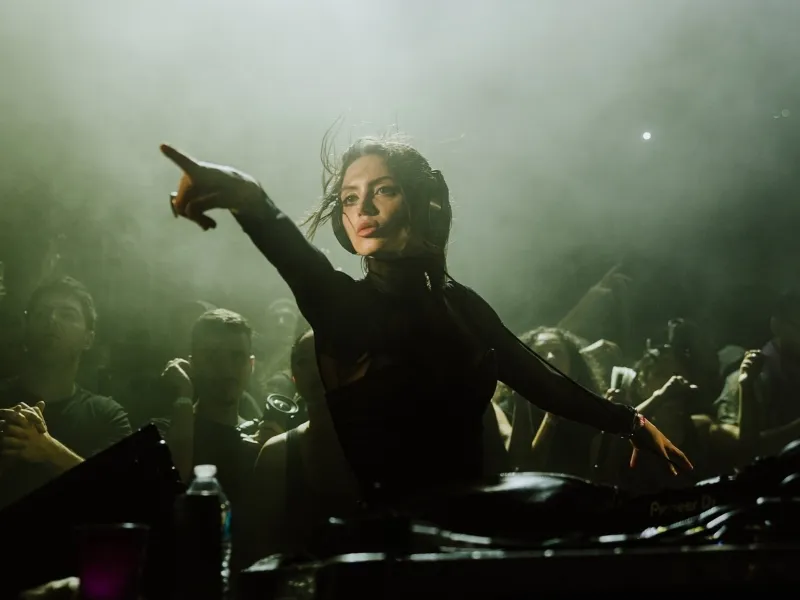
Techno is one of electronic music’s most influential and globally recognized genres, defined by its repetitive rhythms, minimalistic structure, and futuristic aesthetic. It emerged in the early 1980s as an experimental sound shaped by social change, technological advancement, and underground resistance. From its Detroit origins to warehouse raves across Europe and massive global festivals, techno has remained a constantly evolving force in dance music.
1980s: Detroit Origins and Industrial Influence
Techno began in Detroit in the early 1980s, created by a trio of Black artists—Juan Atkins, Kevin Saunderson, and Derrick May—often referred to as the Belleville Three. They drew from synth-pop, Chicago house, funk, and European electronic pioneers like Kraftwerk. The result was something radically new: a machine-driven sound rooted in rhythm and futurism. Tracks like Atkins’ “Clear” (as Cybotron) and May’s “Strings of Life” helped shape the genre’s early sonic blueprint. At its core, Detroit techno was both escapist and revolutionary, reflecting the economic decline and creative resilience of the city.
1990s: European Expansion and Subgenre Growth
In the 1990s, techno exploded across Europe, particularly in Germany, the UK, and the Netherlands. Berlin became a global hub for the genre after the fall of the Berlin Wall, with clubs like Tresor and Berghain rising as iconic spaces for techno experimentation. The UK rave scene embraced harder-edged styles, while Dutch and Belgian artists pushed aggressive, industrial tones. This era also brought about key subgenres like acid techno, minimal techno, and hard techno, each with its own loyal following. Back in the U.S., techno remained more underground than house, but artists like Jeff Mills and Carl Craig carried the Detroit legacy forward.

Credit: DJ Mag
2000s: Underground Persistence and Festival Growth
While mainstream attention leaned toward trance and house, techno continued to thrive in clubs and warehouse parties. Minimal techno gained popularity through artists like Richie Hawtin, while labels like Minus and Ostgut Ton elevated sleek, hypnotic sounds. In Europe, large-scale festivals like Awakenings and Time Warp began putting techno center stage. Techno scenes also grew in countries like Spain, Italy, and Eastern Europe, where it became a cultural movement tied to political freedom and creative autonomy. In the U.S., techno was slower to break into the mainstream, often overshadowed by other genres of dance music.

2010s: Global Resurgence and Genre Blending
The 2010s saw a major resurgence of techno worldwide. Younger audiences began to embrace its raw intensity, and the genre found new life through genre-blending artists. Techno intersected with industrial and ambient influences, while artists like Charlotte de Witte, Amelie Lens, and Dax J rose to prominence with harder, faster styles. Simultaneously, pioneers like Carl Cox and Nina Kraviz remained mainstays in the global scene. In Latin America, South Africa, and Asia, techno emerged as a powerful underground voice, driven by independent collectives and local champions who used the music to resist cultural gatekeeping and build community.

Credit: DJ Mag
2020s: A New Era of Diversity and Innovation
Today, techno continues to evolve, shaped by a new wave of artists challenging genre norms and industry barriers. Artists like Sara Landry are pushing a heavier, more theatrical style of hard techno, earning massive fanbases while reclaiming space in a male-dominated scene. The rise of queer, non-binary, and BIPOC artists has added new energy to techno’s global reach, especially through collectives and labels focused on inclusion and access. From underground parties in Tbilisi and São Paulo to massive stages at Movement and Tomorrowland, techno remains one of the most progressive and powerful forces in electronic music.
Follow Stage Hoppers
Instagram | Facebook | X | TikTok | Spotify | Home